
After the declaration of war in September 1939, it was decided to transfer cadets to Foots Cray Place in Kent, which had been made available through the kindness of Lord and Lady Waring. In that month the College moved to a shore-based establishment which was to serve as a “Ship” until the end of the War in 1945.It was an imposing building of Italian-style architecture, standing in an estate of 100 acres of beautiful Kent countryside. Tall double wrought iron gates opened to the Lodge and a long sweeping drive to the portico entrance. The Foots Cray History .
The house itself was constructed on three levels. On the ground floor (middle level) the marble floor of the portico and entrance hall continued through to the large main hall on the same level capped and open to a large, round dome in the centre of the building’s roof. At the upper floor level a gallery ran around the base of the circular dome, providing direct access to the rooms located on the four sides of the building.
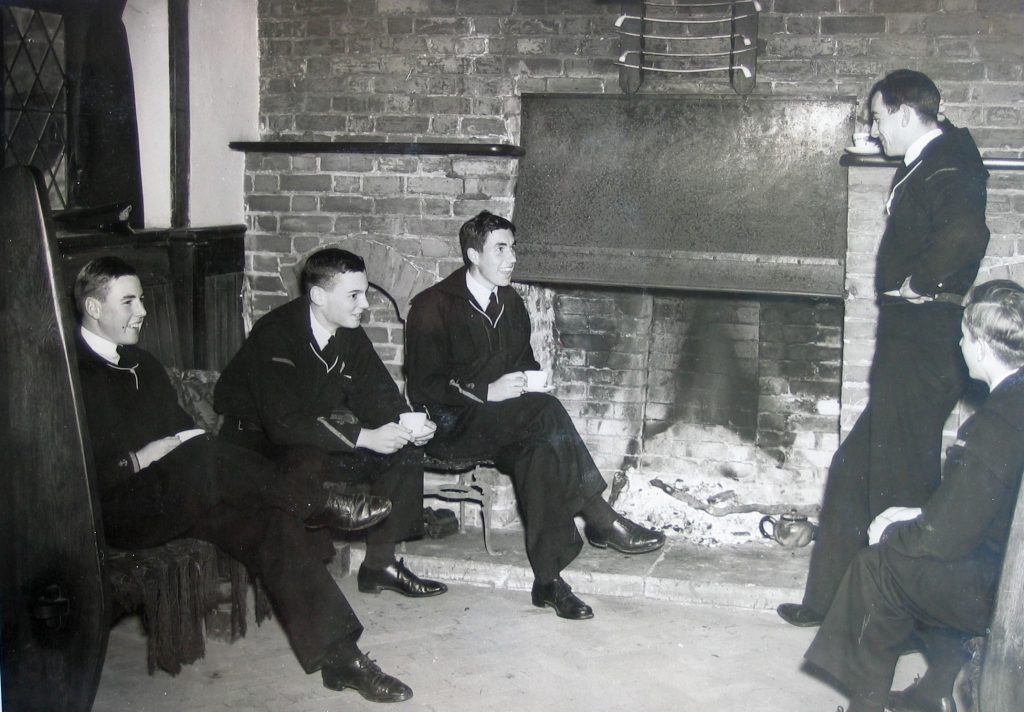
This upper level was divided into bedrooms, both large and small, which accommodated two tier bunks and cadets’ sea chests. There were four original small bath/dressing rooms of which one was allocated to the Chief Cadet Captain as his personal domain. School classes were held on the middle level. The large and small dining room were also located here. The Captain Superintendent’s day cabin was situated off the entrance foyer, as were other staff offices. A small mezzanine floor above this area accommodated members of the staff and their sleeping quarters. The basement consisted of wide catacomb-like stone passageways along the walls of which two tier bunks and sea chests were arranged to complete the cadets’ sleeping area. Also located at this level was the galley, the sick bay and individual cabins of the Instructors.
Outside the basement two wooden huts were erected to augment the classroom facilities. A washroom with showers together with the ‘heads’ was constructed for the use of cadets in the basement. Field sports were catered for with six grass tennis courts and three rugby and soccer pitches with cricket in the summer. The surrounding countryside with copse and undulating terrain provided excellent conditions for cross-country running.
Despite the large acreage, cadets were confined to a limited “in-bounds” area; the terrace on the south side of the house provided the space for the daily “slewing”…Wartime precautions were largely responsible for this confinement.

A typical day started at 0700 with two duty buglers sounding reveille in the main hall – the sound chamber effect of the dome on the buglers’ efforts assured the awakening of the deepest sleeping cadet! Ablutions, dressing and bunk making all took place in double smart time before falling in by divisions for “Jerks”. The level and intensity of this activity was a direct reflection of the particular cadet captain’s own athleticism. Divisions followed with the Ship’s Company fallen in for inspection and colours. The Chief Officer was the daily inspecting officer but on Sunday the Captain Superintendent passed his eagle eye over the assembly. Pity the first termer who had missed a speck on his square jacket – or worse still had “tramlines” for a trouser crease! Breakfast followed with a session of “Clear up Decks” before the start of school.
Saturday mornings witnessed the sweeping, scrubbing and polishing of every inch of the building’s floor space. The morning session of school ended at noon when cadets moved to Sections with the pipe for lunch at 1300. The dining room seating was not based on divisions, except for first termers in the Afterguard Division. In the main Dining Room there were five refectory type tables each split into three groups. A cadet captain and senior badge cadet headed each group of ten, which descended in order of seniority. The mess group were identified as Window, Middle and Door number 1-5. Wartime rationing allowed each cadet a 2-ounce packet of butter on Sundays and a 4-ounce packet of margarine on Wednesdays. Food parcels from parents invariably contained a pot of much favoured peanut butter.
Each term, visits to the “Cutty Sark” were organised by Section, usually once each. It was a full day visit and the journey was made by train. Lifeboat drill, boat pulling and heaving the leadline were typical activities undertaken. The visit sometimes ended with a swim in the College baths. Sporting activities played a large part in the College life. Three XV’s and three XI’s were fielded in winter competitions while three cricket XI’s represented the Ship in summer months. Gymnastics were considered to be very important and the standard was such that gymnastic displays became a regular feature of Sports Day and fund raising for charities locally.
Foots Cray is an ancient village, near to the Greater London suburb of Sidcup. It was developed between the wars and as such, it suffered to some extent from the German bombing of London. The College was granted sub-warden status, which meant it received early warning of approaching bombers. On air raid alerts, cadets would repair to the basement and at night senior cadets were rostered on “Fire Watch” duty. Stationed on the roof their task was to report any wayward incendiary bombs falling on or near the building – stirrup pumps and extinguishers were at the ready!
On one such night in 1944, the duty fire watchers were alarmed and mystified to see flying objects with their tails alight coming from the South at regular intervals. They were witnessing the first of Hitler’s secret weapons – the flying bomb or V1. Soon they started arriving by day as well, which necessitated a cadet standing watch ready to blow a whistle should an approaching bomb be on a flight path likely to pass overhead. When this was judged to be the case the watch cadet blew his whistle Ready to go!which sent cadets from their lessons down to the relative safety of the basement.
Later that year the South East of England became the target of the V2 rocket. Though more devastating in their impact, they were less nerve racking than the V1 as their arrival was totally unannounced by any noise or other phenomenon. The College had the greatest of good fortune during these years. The only bomb damage of significance was the demolition of the Lodge during the summer holidays – during term time it provided overflow sleeping quarters for a dozen or more cadets. A single fatality was record – the handyman/cricket coach was killed by an unexploded British ack-ack shell falling on the College lorry as he drove from Greenhithe to Foots Cray.
Hostilities finally ceased with the defeat of Japan in August 1945. Captain Steele returned from his wartime duties and resumed his position by relieving Acting Captain Superintendent Jackson in the Michaelmas Term and Cornel Donner joined the staff as Third Officer. Reflecting on those troubled years Captain Jackson, Chief Officer Richardson, Headmaster Luly and their respective staffs deserve high praise for maintaining without interruption the day to day activities and standards of the College. No special occasion was missed or cancelled during this period and Sports Day, Section Day, Prize Giving and Gold Medal Day and all sporting fixtures successfully took place.
